Arkansas Weather Network
- 4.3
- Rating
- 10.00K
- Installs
- Free
- Price

 Analysis by App-foxy
Weather apps are easy to judge when the sky is clear: open one, glance at a temperature, and move on. The real test comes when conditions are changing quickly and I need an answer before leaving home, driving across Arkansas, or deciding whether an outdoor plan is still sensible. Arkansas Weather Network is built around that practical need. It is a free weather app from Arkansas Weather Network LLC, focused specifically on Arkansas rather than trying to be a general-purpose forecast tool for everywhere.
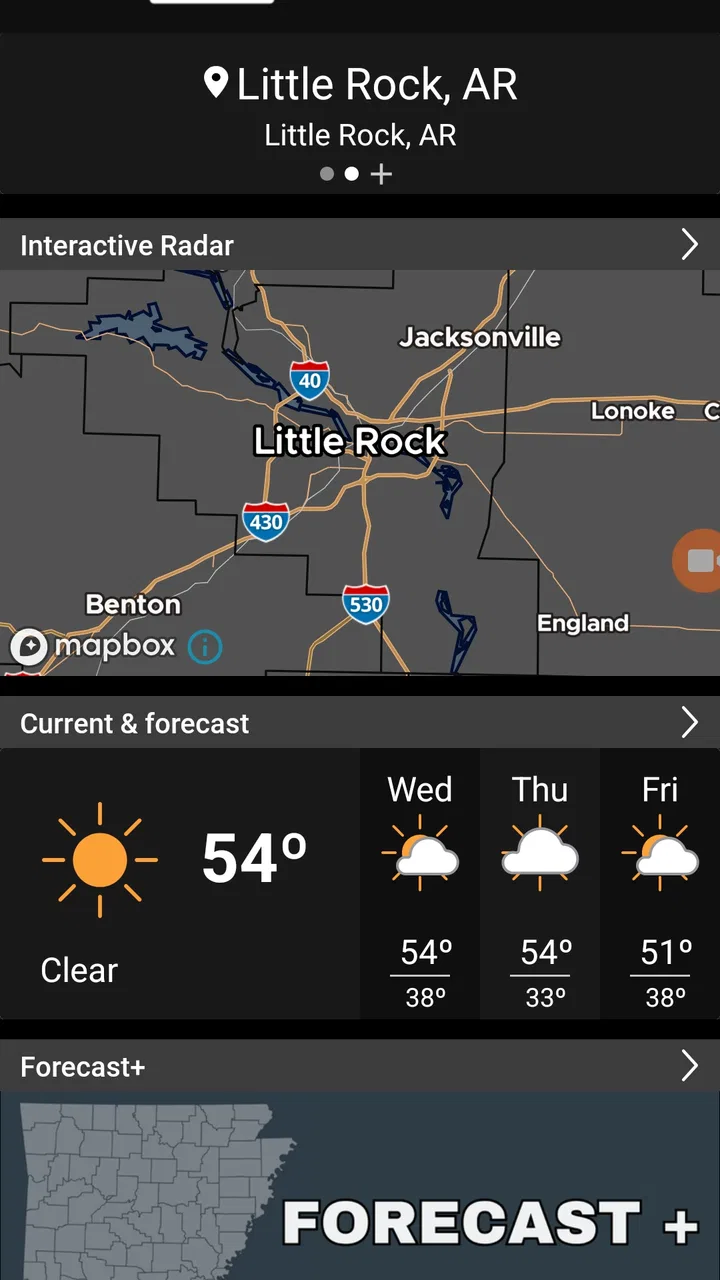
After spending time with it, my impression is that its strongest identity is local awareness. The app is not trying to replace every tool on my phone. Instead, it gives Arkansas weather a dedicated place, which matters when a broad national app feels too distant from what is happening in a particular part of the state. Its store summary presents real-time statewide coverage, and that focus comes through in the way I think about using it: not as a decorative forecast screen, but as a companion for checking changing local conditions.
The important trade-off is connectivity. This is an internet-dependent experience in the ordinary sense that current weather information needs a connection to reach the app. That makes the quality and availability of my mobile data or Wi-Fi part of the experience. When the network is responsive, checking conditions can be quick and useful. When coverage is weak, I have to be more patient and avoid treating a delayed or incomplete view as a complete picture of what is happening outside.
You May Also Like

 AccuWeather: Weather Radar
AccuWeather Review: A Quick, Clear Forecast for Everyday Decisions
For everyday plans, the best forecast is the one you can understand quickly. AccuWeather makes rain timing, radar, and local conditions easy to act on, with a few trade-offs.

 Hill Climb Racing
Why Hill Climb Racing Still Turns Crashes Into One More Run
A tiny car, a bumpy hill and one more upgrade: Hill Climb Racing keeps resurfacing because its simple chaos makes every near-miss feel personal.

 AliExpress - Shopping App
AliExpress Makes Global Shopping Feel Personal, but Shoppers Bear the Risk
AliExpress turns a global marketplace into a pocket-sized discovery engine. Its reach is useful, its shopping loop compelling, and its trade-offs easy to miss.

 Lords Mobile: Kingdom Wars
Lords Mobile Is a Kingdom-Building Routine, Not a Quick Match
A case-by-case verdict on the building, battles, device demands, and social commitments that make Lords Mobile rewarding for some players and exhausting for others.

 PDF Scanner app - TapScanner
TapScanner Makes Paperwork Easier to Capture, Check, and Share
TapScanner makes scanning with a phone feel less like a rescue operation and more like a dependable step in getting work done. Its capture tools are useful, though not flawless.

 Block Blast!
 Shows How Much a Puzzle Game Can Leave Out
A quiet grid game shows why puzzle players increasingly value instant clarity, repeatable skill and low-pressure play—and where the genre still needs to catch up.
More From Our News Desk
View All News


How the Arkansas focus changes everyday weather checking
My usual habit with a general weather app is to search for a city, read a forecast, and close it. That works, but it can feel impersonal when I am interested in Arkansas as a whole or when my day involves more than one area. A dedicated state weather app makes more sense for people who follow conditions across different communities, travel within Arkansas, or want a local perspective rather than a broad national presentation.
A realistic example is a morning drive that begins in one town and ends several hours away. I might check the weather before leaving, then look again during a safe stop if the sky changes or road conditions become uncertain. The value is not simply seeing a temperature. It is having a focused place to revisit Arkansas conditions without repeatedly rebuilding a search in a general app.
The statewide angle is also useful for people whose decisions are tied to more than their home address. Outdoor workers, families visiting relatives, delivery drivers, event organizers, and anyone planning a trip through the state may care about several locations in one day. I would not expect one reading to explain every local variation, but the app’s Arkansas-first purpose gives those checks a clearer reason to exist.
That focus also sets a boundary. If I regularly travel outside Arkansas, I would still keep a broader weather service available. A national or international app is usually more convenient for a multi-state itinerary, airport stops, or destinations far beyond the region. Arkansas Weather Network is most convincing when Arkansas itself is the subject, not when it is merely one stop among many.
When a live connection matters most
The app is at its most useful when I open it shortly before making a decision. Checking before a commute, a walk, a school pickup, or an outdoor appointment gives the current network connection a meaningful role. A forecast viewed earlier can become less helpful as conditions develop, so I prefer to refresh my understanding close to the moment I need it.
That habit is especially important during unsettled weather. I would not rely on a single glance several hours earlier when clouds, wind, or rain are already changing. Instead, I use the app as part of a repeated check: look before leaving, reassess if the situation feels different, and avoid assuming that a screen loaded successfully is automatically current.
There is a subtle but useful distinction here. Connectivity does not make the forecast more accurate by itself; it determines whether I can access the latest available view. If the signal is poor, the app may become less convenient at exactly the time I want it most. This is why I treat it as a tool for informed decisions, not as permission to ignore what I can see and feel outdoors.
Using it on the move without creating extra friction
Mobile weather checking is usually done in imperfect circumstances: standing near a doorway, walking toward a vehicle, waiting in a parking lot, or taking a short break at work. I found the app easier to appreciate when I gave it a clear job before opening it. Rather than browsing aimlessly, I decide whether I need a quick local check, a look at conditions along a planned route, or a second opinion when the weather outside does not match my expectation.
For driving, I would check before starting and only revisit it after stopping safely. This is a small workflow, but it prevents the app from becoming a distraction. For a family outing, I would check the destination and the return window separately instead of assuming the weather will remain unchanged. For outdoor work, I would build in another check before beginning a task that is difficult to pause.
One non-obvious benefit of a dedicated regional app is mental simplicity. A broad app may offer many layers, locations, and global details that I do not need for a short Arkansas trip. A narrower tool can reduce the temptation to overread information. The trade-off is that I may need another source for specialized planning, long-distance travel, or conditions beyond the state.
The app is rated for Everyone, which makes it approachable for households where several people may need a straightforward weather reference. I can imagine a parent using it before a school activity, an older relative checking the morning forecast, or a teenager learning to make better plans around changing conditions. Its usefulness still depends on the user understanding that weather information is guidance, not a guarantee.
What happens when the connection is weak
Connectivity problems are not a minor detail for a weather app. If I am in a rural area, inside a building with poor reception, or moving between coverage zones, a request may take longer than expected. The practical response is to avoid frantic repeated taps. I would wait for the screen to settle, try again when the connection improves, and compare the result with visible conditions rather than assuming that a slow response means the weather is unchanged.
This is also where preparation matters. Before leaving reliable Wi-Fi, I would check the weather for the places I expect to visit and remember the broad plan rather than depending on a last-second lookup. I am not treating that as offline functionality; it is simply sensible preparation for any connection-dependent service. If the trip involves remote roads or a long period without dependable reception, I would not make this app my only source of situational awareness.
Recovery after a failed check should be simple in principle: regain a connection, reopen or retry the relevant view, and verify that the information reflects the moment I care about. I prefer this cautious approach to reading an old screen as if it were live. The app can be useful again once access is restored, but the user has to recognize the difference between current information and information that merely remains visible.
That limitation is not unique to this app, but it is more noticeable because the product’s main appeal is timely local coverage. A general weather app with cached screens may feel more forgiving during a brief signal interruption, while a radio, local broadcast, or other non-app source may be better when connectivity is unavailable for a long stretch. I would choose Arkansas Weather Network for connected checks and keep a backup habit for demanding situations.
Managing data without turning weather into a chore
For most people, occasional weather checks are unlikely to feel like a major data burden. Even so, I prefer a deliberate routine when using any live information app. I check when I have a specific question, close it when I am done, and avoid repeatedly refreshing simply because I am anxious about a forecast. This keeps the experience focused and makes each check easier to interpret.
Wi-Fi is the comfortable choice for longer browsing or for preparing several locations before a trip. Mobile data is more valuable when I am already away from home and need a timely answer. The sensible balance is to use the app on cellular when the decision matters, but not to treat it like a continuously open dashboard throughout the day.
Another useful habit is to separate planning from monitoring. I might use Wi-Fi in the morning to think through an outing, then perform one short mobile check before leaving and another only if the conditions or schedule change. That workflow is less wasteful than constantly checking, and it reduces the chance that I confuse repeated screen updates with genuinely new insight.
I also pay attention to context. A forecast for home may not answer the question I have about a destination across the state. If I am traveling, I make sure I am checking the place that affects the decision, not simply the most familiar location. This sounds obvious, but it is one of the easiest mistakes to make when opening a weather app quickly.
Who will appreciate this app most?
I think Arkansas residents are the clearest audience, especially those who want a state-specific weather reference instead of a generic service built around a worldwide map. It should also appeal to people who travel around Arkansas, follow local conditions for outdoor plans, or prefer a local identity in their weather tools.
The app is less suitable for someone who wants a single solution for several states, international destinations, detailed travel planning, or a complete suite of unrelated phone utilities. In those cases, a larger weather platform may be more convenient. I would also hesitate to recommend relying on it alone for situations where connectivity is unreliable or where a professional, official alert channel is required.
Its audience size appears healthy enough to show real interest without making the app feel like a massive anonymous platform: it has more than ten thousand installs, a 4.5 average from around seventy ratings, and thirty-seven written reviews. Those figures suggest encouraging user reception, but I would still judge it by whether its Arkansas focus matches my needs rather than by popularity alone.
Version, cost, and the practical decision
The app is free, which removes the biggest barrier to trying it. It was released on November 26, 2025, and the current version is 6.7.1.5. It supports Android 7.0 and later, so compatibility should be comfortable for many older devices as well as newer phones. I appreciate that the entry decision is straightforward: install it, test it during the kinds of weather checks I actually make, and keep it only if the local focus earns a place in my routine.
Because there is no purchase decision to weigh, the real cost is attention and connectivity. I need to decide whether another weather app on my phone adds useful Arkansas context or simply duplicates what I already have. For me, the answer depends on how often I need statewide awareness. If I live in Arkansas and regularly plan around local conditions, the specialization is meaningful. If I only pass through occasionally, a general app may be enough.
The developer, Arkansas Weather Network LLC, gives the app a clear regional identity. That is more useful to me than a vague promise of being suitable everywhere. I know what role to test: connected Arkansas weather checking, especially when a local perspective matters more than a broad international dashboard.
My connectivity verdict
Arkansas Weather Network works best when I use it intentionally: connected, close to the decision I need to make, and with the location or travel context in mind. Its strongest quality is not that it can replace every weather source. It is that it gives Arkansas conditions a dedicated home and encourages more relevant checks for people whose lives are tied to the state.
I would recommend it to an Arkansas resident who wants a free, focused weather app for everyday planning. I would also suggest it to anyone who regularly moves around the state and wants a simpler alternative to a nationwide weather dashboard. I would not make it my only tool for remote travel, prolonged loss of service, or destinations outside Arkansas.
My final advice is to build a small routine around it: check before leaving, recheck when conditions visibly change, use Wi-Fi for preparation when convenient, and never confuse a loaded screen with a guarantee of current conditions. With those expectations, the app feels practical rather than overpromising. For connected, Arkansas-specific weather checks, it earns a place on my phone.
In short, Arkansas Weather Network is a specialized weather app rather than an all-purpose forecasting universe. That narrow purpose is its advantage and its limitation. If local Arkansas coverage is what you genuinely need, the free price and accessible Android support make it easy to try. If your priorities are global travel, deep offline resilience, or one app for every region, I would choose a broader companion instead.
FAQs for Arkansas Weather Network
01What features does the Arkansas Weather Network app offer?
The Arkansas Weather Network app provides real-time weather updates, forecasts, radar imagery, and severe weather alerts. Users can customize notifications for specific locations and access detailed hourly and weekly forecasts. Additionally, the app offers interactive maps and video updates from local meteorologists.
02Is the Arkansas Weather Network app free to use?
Yes, the Arkansas Weather Network app is free to download and use. However, it may offer in-app purchases or premium features for users who want an enhanced experience, such as ad-free usage or additional weather data. Be sure to check the app store for specific pricing details.
03How accurate is the weather information provided by the app?
The app uses data from trusted meteorological sources, including local weather stations and national weather services, ensuring high accuracy. It also features real-time updates to reflect changing weather conditions, providing users with the most current information available. However, keep in mind that no weather prediction can be 100% accurate.
04Can I receive severe weather alerts through the app?
Yes, the Arkansas Weather Network app allows users to receive severe weather alerts tailored to their specific location. These alerts are customizable, so you can choose which types of severe weather notifications you want to receive, ensuring you stay informed about potential weather threats in your area.
05Does the app require an internet connection to function?
While some features like real-time updates and radar imagery require an internet connection, the Arkansas Weather Network app stores basic forecast data for offline access. This means you can still view previously downloaded forecasts without the internet, although live updates and new information will need connectivity.
Pros
- User-friendly interface with easy navigation.
- Real-time weather updates for accuracy.
- Customizable notifications for severe weather.
- Detailed radar maps for better planning.
- Includes local news and weather alerts.
Cons
- Ads can be intrusive at times.
- Limited customization for widgets.
- Occasional slow loading of maps.
- Requires stable internet for updates.
- No offline mode available.

Arkansas Weather Network
Gallery